Parcel 1
Premium 3.5 BHK and 4 BHK inventory with taller structures and the more aspirational home formats.
Master Plan
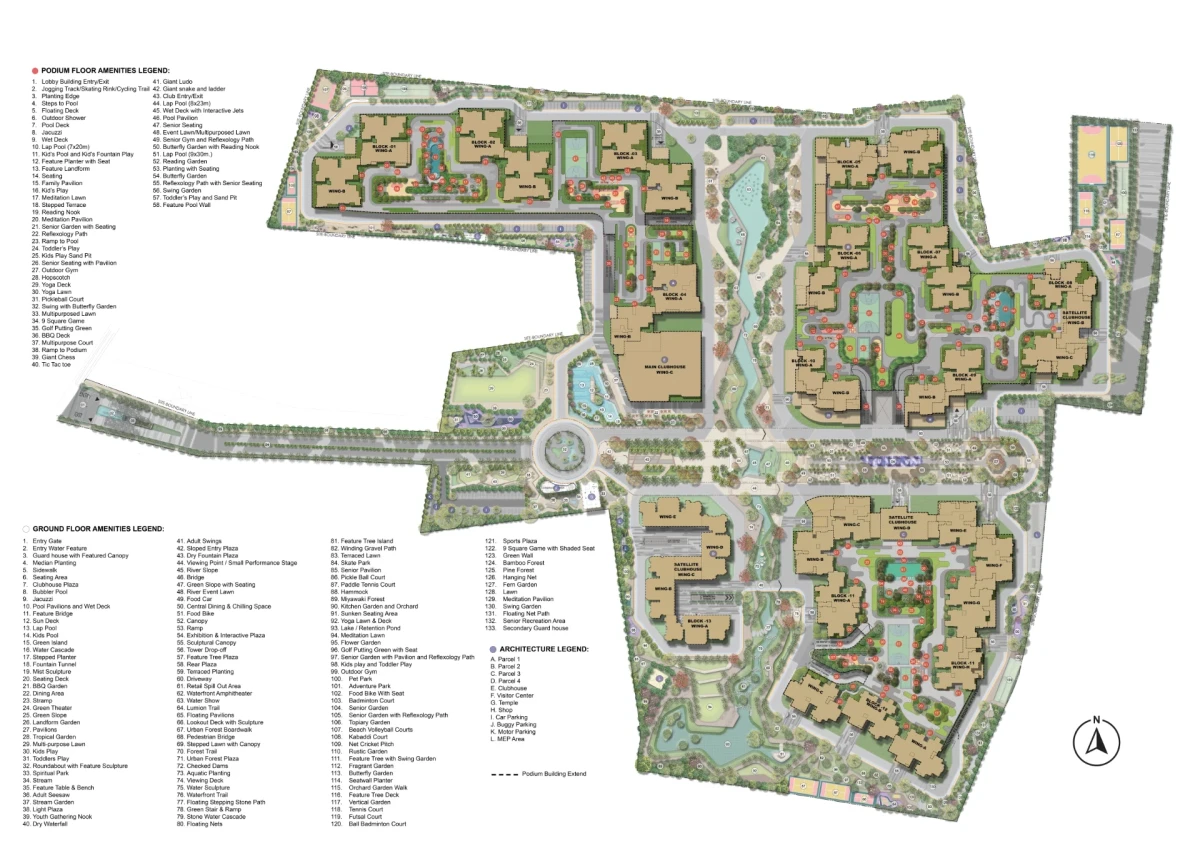
The master plan matters here because the project is not just large, it is phased. Parcel planning determines which buyer profile goes where, how the premium inventory is separated, and how the common amenity network serves the whole township.
Premium 3.5 BHK and 4 BHK inventory with taller structures and the more aspirational home formats.
2 BHK and 2.5 BHK inventory that opens the township to broader family and investor budgets.
Mixed 2 BHK to 3 BHK towers, helping the project keep both breadth and resale depth.
In a township, the master plan drives everyday experience. It influences light, access, views, movement, amenity convenience, and even which towers feel quieter or more premium. At Sattva City, the master planning is part of the product itself.
Master Plan Reading
The easiest thing to sell in real estate is a single tower. You draw a rectangle, put some balconies on it, and call it a project. Sattva City is not that kind of project. It is a township master plan in North Bangalore, and the master plan is the drawing that explains how the 50-acre site actually works on the ground.
If the floor plan shows you your home, the master plan shows you your world. It tells you where your tower sits, how far you walk to the clubhouse, what you see from your balcony, and how the roads and green belts carry sound, wind, and people through the site. The broader planning logic is close to the kind of thinking described in master plan references, while the developer background can be checked on the official Sattva Group corporate overview page.
The official plan is a top view of the township. It shows all 13 towers, entry and exit points, internal roads, four clubhouses, landscaped gardens, urban forest pockets, amenity zones, parking areas, and walking loops. The core facts are simple: about 50 acres of land, 3,460 apartments, 13 high-rise towers, and more than 80 percent of the site kept open and green.
The master plan matters because this is not a single building project. It is a phased township. Parcel planning decides which buyer profile goes where, how the premium inventory is separated, and how the common amenity network serves the whole site.
In a good township master plan, towers are not dropped randomly on a grid. They are placed to balance light, ventilation, privacy, and views. At Sattva City, the towers are arranged in clusters around large central greens and amenity courts instead of being crammed edge to edge. That means many balconies look toward parks, walking trails, or open sky rather than directly into another facade.
Height variation also helps. When towers are stepped and spaced properly, the lower parts of the township do not feel boxed in, and many homes gain clearer outlooks over gardens and water features. You can verify the project registration and approvals on Karnataka RERA if you want to cross-check the official paperwork alongside the layout.
Many projects mention open space in passing. Here, it is the main structural choice. The plan keeps most of the land as non-built area, and that open land is carved into parks, tree-lined avenues, water bodies, jogging and cycling tracks, play zones, and pet-friendly areas. In a township of this size, that is what keeps the experience from turning into another dense concrete cluster.
That also changes daily life. Better ventilation, more usable outdoor space for children and seniors, and longer visual relief across lawns and trees are all part of the master-plan advantage. The same logic is visible if you compare the site plan with the gallery on the gallery page.
Sattva City is too big for one clubhouse to serve everyone well, so the plan places four clubhouses in different zones. That matters because it reduces crowding and travel distance. A child from almost any tower can reach a play area or indoor activity zone in a short, safe walk, and adults can use the amenity network without feeling like they are crossing half the township.
Roads and parking are equally important. The plan keeps entry and exit points on the approach road, channels vehicles into internal loops and parking areas, and keeps pedestrian routes inside the green belts. That separation of cars and people is one of the clearest signs that the project is being planned as a lived-in neighbourhood rather than just a parking layout with towers on top.
Find your tower and its neighbours. Check distance to clubhouses and key amenities. Look at edges and buffers. Compare open space to built-up area. Then think about your own daily routine. The master plan is not just a drawing of buildings; it is a picture of how life inside the township will work every day.
Once you understand the master plan, the rest of the site becomes easier to judge. The floor plan tells you how a home works. The overview explains the township idea behind it. The location page shows how the township connects to the city. Put those pieces together and the plan stops looking abstract.
Need parcel and tower guidance?